Justine Larbalestier, author of Liar, says she wanted an American cover similar to the Australian cover, which depicted the word "liar" in red letters. But Bloomsbury "has had a lot of success with photos of girls on their covers and that's what they wanted." So why a white girl? Larbalestier says not all the girls Bloomsbury proposed were white, but the one they went with may have to do with some upsetting prejudices in the publishing and bookselling industries.
Full Article
Wednesday, January 22, 2014

Monday, January 20, 2014
Sci-Fi/Fantasy Diversity Quotes
The supposed inviability of the “black cover” may have more to do with racist assumptions — that white people won’t be interested in a book with a black protagonist, or that black people won’t buy books — than they do with actual commercial realities.
Anna North
Anna North
Sunday, January 19, 2014
"Cuts Both Ways: Racial Coding in the Blade Movies" By Nalo Hopkinson
I've seen both Blade movies now. The premise is that there are now two humanoid races in the world; humans and vampires. The vampires prey on the humans, and if a human gets bitten by a vampire, s/he becomes a vampire, if they don't die outright. Kind of an interspecies one-drop rule. Once you try Drac, you can never go back.
Vampires can only be out at night; they can't stand the bright light of day. But Blade is different. He's the son of a black mother who was bitten by a white vampire while she was pregnant. Blade's a vampire-human mulatto. Unlike a full blood (!) vampire, he can tolerate the both daylight and night. The vampires call him Day-Walker. Blade hates vampires and is trying to kill them all, and to destroy the vampire side of himself. He spends a lot of time trying to discover a serum that will suppress the vampire in him. He has to take the serum regularly, or the vampire side of him starts to break through. In the first film, "vampire" gets coded as "black" and "human" as "white." The film makes explicit jokes about Blade being an Uncle Tom; it's right there in the dialogue. The serum is administered intravenously, and Blade goes through a total junkie enactment when he self-administers the serum; ties a vein up, injects himself, has a bit of a fit, trembles and shakes, nods off for awhile. Made even more interesting by the fact that he's played by a black man, the junkie imagery being a popular way of portraying black men in film and television.
Entire Article
Vampires can only be out at night; they can't stand the bright light of day. But Blade is different. He's the son of a black mother who was bitten by a white vampire while she was pregnant. Blade's a vampire-human mulatto. Unlike a full blood (!) vampire, he can tolerate the both daylight and night. The vampires call him Day-Walker. Blade hates vampires and is trying to kill them all, and to destroy the vampire side of himself. He spends a lot of time trying to discover a serum that will suppress the vampire in him. He has to take the serum regularly, or the vampire side of him starts to break through. In the first film, "vampire" gets coded as "black" and "human" as "white." The film makes explicit jokes about Blade being an Uncle Tom; it's right there in the dialogue. The serum is administered intravenously, and Blade goes through a total junkie enactment when he self-administers the serum; ties a vein up, injects himself, has a bit of a fit, trembles and shakes, nods off for awhile. Made even more interesting by the fact that he's played by a black man, the junkie imagery being a popular way of portraying black men in film and television.
Entire Article
Tananarive Due
Speculative and Creative Fiction Writer
Tananarive Due

Official Site
Artist Info Pages
Published Works
African Immortals Series
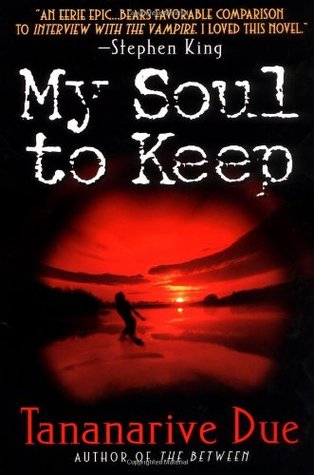
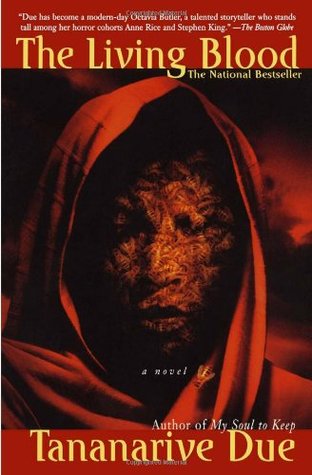
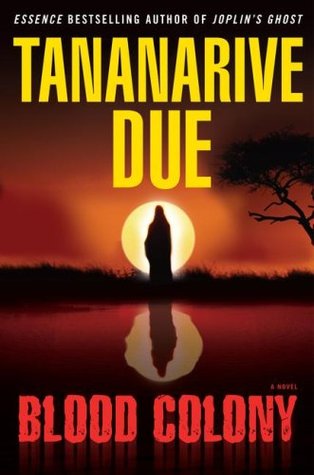
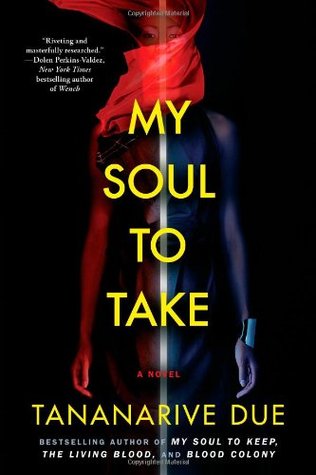
Speculative FIction Novels
The Between

The Good House

Joplin's Ghost

The Between

When Hilton was just a boy, his aged grandmother saved him from drowning by pulling him out of a treacherous ocean current, sacrificing her life for his. Now, thirty years later, Hilton begins to think his borrowed time is running out. His wife, the only elected African–American judge in Dade County, Florida, has begun receiving racist hate mail from a man she once prosecuted, and Hilton's sleep is plagued by nightmares more horrible than any he has ever experienced.
As he battles both the psychotic stalking of his family and the unseen enemy that haunts his sleep, Hilton's sense of reality is slipping away. Shocking and utterly convincing, The Between is a novel about a man desperately trying to hold on to the people and life he loves but may have already lost, and it holds readers suspended between the real and the surreal until the final moment of chilling resolution.(less)
As he battles both the psychotic stalking of his family and the unseen enemy that haunts his sleep, Hilton's sense of reality is slipping away. Shocking and utterly convincing, The Between is a novel about a man desperately trying to hold on to the people and life he loves but may have already lost, and it holds readers suspended between the real and the surreal until the final moment of chilling resolution.(less)
The Good House

The house Angela Toussaint's late grandmother owned is so beloved that townspeople in Sacajawea, Washington, call it the Good House. But is it? Angela hoped her grandmother's famous "healing magic" could save her failing marriage while she and her family lived in the old house the summer of 2001. Instead, an unexpected tragedy ripped Angela's family apart.
Now, two years later, Angela is moving past her grief and taking control of her life as a talent agent in Los Angeles, and she is finally ready to revisit the rural house she loved so much as a child. Back in Sacajawea, Angela realizes she hasn't been the only one to suffer a shocking loss. Since she left, there have been more senseless tragedies, and Angela wonders if they are related somehow. Could the events be linked to a terrifying entity Angela's grandmother battled in 1929? Did her teenage son, Corey, reawaken something that should have been left sleeping?
With the help of Myles Fisher, her high school boyfriend, and clues from beyond the grave, Angela races to solve a deadly puzzle that has followed her family for generations. She must summon her own hidden gifts to face the timeless adversary stalking her in her grandmother's house -- and in the Washington woods.
Joplin's Ghost

When Phoenix Smalls was ten, she nearly died at her parents' jazz club when she was crushed by a turn-of-the-century piano. Now twenty-four, Phoenix is launching a career as an R & B singer. She's living out her dreams and seems destined for fame and fortune. But a chance visit to a historical site in St. Louis ignites a series of bizarre, erotic encounters with a spirit who may be the King of Ragtime, Scott Joplin.
The sound of Scott Joplin is strange enough to the ears of the hip-hop generation. But the idea that these antique sounds are being channeled through Phoenix? Her life is suddenly hanging in the balance. How will she find her true voice and calling? Can the power of her own inner song give Phoenix the strength to fight to live out her own future? Or will she be forever trapped in Scott Joplin's doomed, tragic past? Stunningly original, Joplin's Ghost is a novel filled with art and intrigue -- and is sure to bring music to readers' ears.
Subscribe to:
Comments (Atom)